When Spring Freezes Threaten Georgia's Peaches: Inside the Fight to Save the CSRA's Most Iconic Crop
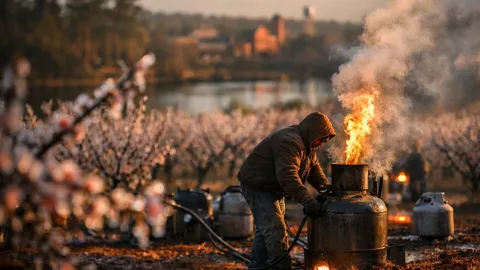
It's 2 a.m. on a March night at Sandhills Farm in Columbia County, and owner Jennifer Paulk hasn't slept. She's standing in the middle of her five-acre orchard watching temperature gauges like a hawk, one finger hovering over the switch that will fire up the wind machine humming at the orchard's edge. The forecast called for 28 degrees. At 30 degrees, the tender pink blossoms on her Elberta and Redhaven peach trees will survive. At 28, she could lose half her crop before the calendar even hits April.
This is spring in the CSRA, where small-scale peach growers like Paulk fight the same battles as their commercial cousins in Georgia's peach belt 100 miles south—just on a smaller, more personal scale. The difference between a bountiful season and financial heartbreak often comes down to a few critical degrees on a handful of cold nights.
Why Spring Is Make-or-Break for CSRA Peach Growers
Most of us think of peaches as a summer fruit—and they are, when you're biting into one. But the real drama happens months earlier, during those unpredictable weeks between late February and early April when peach trees across Richmond County, Columbia County, and Aiken County burst into bloom.
Peach trees need winter chill hours to properly set fruit—those cold weeks when temperatures hover between 32 and 45 degrees. It's nature's reset button. But once those chill requirements are met and temperatures start climbing, peach buds begin their transformation from tight, dormant clusters into delicate pink blossoms and eventually into tiny green fruit.
Here's the catch: the warmer it gets, the more vulnerable those buds and blossoms become to cold snaps. A peach bud that could easily survive 15 degrees in January will die at 28 degrees in March once it's started to swell and open.
"People don't realize how fragile the process is," explains Dr. Bob Westerfield, a UGA Extension horticulturist who works with growers throughout the CSRA. "Once a peach tree breaks dormancy, you're in this window where the developing fruit is incredibly temperature-sensitive. And we can't exactly tell Mother Nature to hold off on the cold fronts until May."
The Science of Freeze Damage: What's Actually Happening to Those Peach Buds
When temperatures drop below critical thresholds during spring, ice crystals form inside the delicate cells of peach blossoms and developing fruit. Those ice crystals rupture cell walls, essentially killing the tissue. If it happens to the flower's reproductive parts, that blossom will never become a peach. If it happens to a newly formed fruitlet, it'll turn brown and drop off the tree within days.
According to current UGA Extension guidelines, the critical temperature depends entirely on the developmental stage:
- Tight pink bud stage: Hardy down to about 23°F
- Full bloom: Damaged at 27°F or below
- Petal fall (early fruitlet): Vulnerable at 28°F
- Small green fruit: Critical damage at 30°F
The cruelest part? The trees don't show you the damage right away. Farmers often have to wait days or even a week to see which blossoms will brown and fall, which will hang on but produce misshapen fruit, and which will make it through unscathed.
Meet the CSRA Growers on the Front Lines
While Georgia's commercial peach belt lies in the middle of the state—counties like Peach, Crawford, and Taylor that produce most of Georgia's commercial crop—the CSRA has its own community of dedicated peach growers working smaller operations with the same passion and expertise.
Jennifer Paulk's Sandhills Farm in Columbia County started as a hobby orchard seven years ago and now sells peaches at the Evans Towne Center Farmers Market and through a small CSA. Her five acres include eight varieties timed to ripen from late May through August.
"We're not commercial scale, but that doesn't mean we're not serious," Paulk says. "Every tree matters when you only have 150 of them. We use the same techniques as the big guys—wind machines, irrigation frost protection, constant monitoring. We just do it on a smaller footprint."
Across the river in Aiken County, Smith Orchards has been growing peaches, apples, and pecans on their family farm since 1985. Co-owner Martha Smith says their peach operation—about 10 acres—benefits from careful site selection on elevated ground where cold air drains away naturally.
"We chose our orchard location specifically to minimize freeze risk," Smith explains. "Being on a slope means cold air doesn't settle around the trees as badly as it would in a valley. But we still have nights where we're out there at 3 a.m. running sprinklers."
In Richmond County, the Augusta Locally Grown cooperative includes several small peach growers who pool resources for freeze protection equipment. Member farms like Phinizy Swamp Nature Park's heritage orchard and several backyard operations in South Augusta contribute to the CSRA's peach landscape, even if they're not commercial-scale producers.
How CSRA Peach Farmers Fight Back
Local peach growers across the CSRA don't just watch the thermometer and pray. They've developed an arsenal of techniques to protect their crops from spring freeze damage, and on cold nights, these orchards transform into something between a science experiment and a battlefield.
Wind Machines: Stirring Up Warmer Air
Those tall propeller towers you might see in Columbia County orchards aren't decorative. Wind machines—essentially giant fans mounted on 30-foot poles—are one of the most effective freeze protection tools. They work by mixing the warmer air that naturally rises above the orchard with the colder air settling at ground level.
On a clear, calm night with a temperature inversion (when air actually gets warmer as you go up), a good wind machine can raise ground-level temperatures by 2-5 degrees. That's often the difference between a crop and a catastrophe.
The downside? They're loud, they're expensive (upwards of $30,000 per machine), and they only work when there's actually warmer air up above to pull down. For small CSRA growers, that's why sharing equipment through cooperatives makes economic sense.
Irrigation: The Ice Shield Technique
It sounds counterintuitive, but spraying water on peach trees during a freeze can actually protect them. The technique, called overhead irrigation or "ice shield," relies on a basic principle of physics: when water freezes, it releases a tiny bit of heat.
Farmers turn on sprinklers as temperatures approach the danger zone, coating trees and fruit in a continuous layer of water. As that water freezes, it releases just enough heat to keep the tissue inside the ice at 32 degrees—cold, but not cold enough to damage the fruit.
Martha Smith at Smith Orchards swears by this method. "The catch is you have to keep the water running continuously until temperatures rise above freezing in the morning," she says. "Stop too soon, and evaporation will actually supercool the fruit and cause more damage. It's water-intensive, but it works."
Orchard Heaters and Low-Tech Solutions
Some CSRA growers still use orchard heaters—essentially small oil-burning stoves placed throughout the orchard. On a cold night, they create pockets of warmth and can raise temperatures by 2-3 degrees in the immediate area.
Smaller operations sometimes get creative: wrapping young trees in frost blankets, using smudge pots in strategic locations, or even running multiple box fans on extension cords to keep air moving. It's not commercial-scale equipment, but for a backyard orchard or small farm, these techniques can mean the difference between peaches and heartbreak.
What This Season Looks Like
Climate patterns in the Southeast have been shifting, with warmer winters causing earlier bloom dates—which paradoxically increases freeze risk. Trees that might have bloomed safely in mid-April a generation ago are now blooming in mid-March, right when late winter cold snaps are still common.
This season, CSRA peach farms are watching conditions closely. The UGA Extension office serving Richmond and Columbia counties has been sending out regular freeze risk alerts through their email list and working with local growers on timing protection measures.
"It's not just about one cold night," Westerfield notes. "Multiple freeze events in a season are exhausting—physically, emotionally, and financially. Every time temperatures drop, farmers have to make the call: do we deploy protection measures now, or wait and see if it gets cold enough to warrant it?"
The CSRA's position at the northern edge of Georgia's peach-growing region means our farmers deal with more temperature variability than operations farther south. But that also means the peaches that make it through tend to have exceptional flavor—the cooler nights help develop sugars and complexity.
When Peach Season Arrives: Where to Buy Local in the CSRA
If all goes well and our CSRA farmers successfully navigate the spring freeze threats, peach season typically kicks off in late May with early varieties and runs through August. The peak—when those big, juice-dripping freestone peaches arrive—usually hits in June and July.
When the season arrives, skip the grocery store and buy directly from local farms:
Sandhills Farm (Columbia County) sells at the Evans Towne Center Farmers Market on Saturday mornings and offers farm pickup by appointment. Jennifer Paulk grows eight varieties including Elberta, Redhaven, and Georgia Belle, each with its own flavor profile and ripening time.
Smith Orchards (Aiken County) operates a farm stand on their property off Highway 19, open daily during peach season. They offer both tree-ripened peaches for immediate eating and firmer fruit for canning.
Augusta Locally Grown cooperative members sell through their online platform and at various CSRA farmers markets. Check their website for current availability and pickup locations throughout Richmond County.
The peaches are picked riper, taste better, and your money goes directly to the families who spent those sleepless March nights fighting to save them. Look for farms that advertise their varieties by name—each has its own character, and true peach lovers plan their summer around the succession of harvests.
Why Local Peach Farming Matters
Georgia ranks as one of the top peach-producing states in the nation, and while South Georgia's commercial operations dominate the state's production volume, the CSRA's smaller-scale peach farms represent something equally important: agricultural resilience, family farming traditions, and the connection between our community and the food we eat.
Every peach that makes it from March blossom to July harvest is a small miracle of timing, weather luck, and farmer vigilance. When you bite into a CSRA-grown peach this summer—whether from Sandhills Farm, Smith Orchards, or your neighbor's backyard trees—you're tasting the result of countless decisions, sleepless nights, and battles fought against the thermometer.
And that's worth savoring.
Related Posts
CSRA Spring Weather Guide: Navigating Temperature Swings, Freeze Warnings, and Severe Storm Season
Spring Severe Weather Preparedness in the CSRA: What to Know About Tornado Season
Hurricane Preparedness: What Every CSRA Resident Needs to Know Right Now
Local Businesses Mentioned
Explore these CSRA businesses mentioned in this article
Explore Local Businesses
Browse related categories in our directory