Spring Severe Weather Preparedness in the CSRA: What to Know About Tornado Season
When those first warm days of March arrive in the CSRA, we're all eager to spend more time outside. But spring also brings something less welcome: severe weather season. If you've lived here long enough, you know the drill — the sky turns an eerie green, your phone starts buzzing with alerts, and suddenly everyone's checking radar apps and debating whether to move the car inside the garage.
Let's talk about what severe weather really looks like in our corner of Georgia and South Carolina, and more importantly, how to keep your family safe when those warnings start rolling in.
How Often Do Tornadoes Actually Hit the CSRA?
Here's the good news: we're not Kansas. The CSRA doesn't sit in Tornado Alley, and we don't see the violent, long-track tornadoes that make national headlines every spring. But that doesn't mean we're immune.
Historically, the CSRA has experienced mainly EF0 to EF2 tornadoes that touch down briefly and carve relatively narrow damage paths. Richmond County, Columbia County, and Aiken County each see tornado activity during severe weather season, with spring months — particularly March through May — being the most active period. Late-night and early-morning tornadoes are particularly dangerous here because they catch people sleeping.
Columbia County tends to see slightly more tornado warnings than Richmond County, likely due to its more rural landscape and position relative to typical storm tracks. Aiken County experiences similar patterns, with scattered warnings most springs. What matters more than raw numbers is this: when conditions are right, tornadoes can and do happen here, often with little advance notice.
Fort Gordon, with its large military population including many families new to the region, takes severe weather seriously. The installation likely has its own warning systems and shelter protocols, but if you live off-post or work on the civilian side, you need your own plan.
How to Actually Receive Warnings (Before It's Too Late)
Tornado sirens are primarily designed to alert people outdoors. If you're relying solely on hearing a siren through your closed windows over the TV, you're going to miss critical warnings.
Here's what actually works:
Wireless Emergency Alerts (WEA): These are the loud, jarring alerts that override your phone's silent mode. Make sure they're enabled in your phone settings. They're issued by the National Weather Service for tornado warnings in your immediate area.
Weather apps with location-based alerts: Download a reliable weather app and enable notifications for your specific location. Many locals swear by RadarScope or the NWS app, which shows you exactly where warned storms are tracking.
NOAA Weather Radio: This is old-school, but it works even when your phone's dead or cell towers are down. Program it with your county code so it only alerts for Richmond County, Columbia County, or Aiken County warnings, not every storm in South Carolina.
Local news alerts: Follow WJBF, WRDW, and other local stations on social media or through their apps. During severe weather, local meteorologists provide CSRA-specific context that national apps can't match.
The key is redundancy. Have multiple ways to receive warnings, because the worst tornadoes often knock out power and cell service in their path.
Where to Shelter: It Depends on Where You Live
This is where one-size-fits-all tornado advice falls short. Your shelter plan depends entirely on your housing situation.
If you live in a single-family home: Get to the lowest level, in an interior room, away from windows. Bathrooms and closets work well because they're typically small, windowless spaces with extra walls around you. Put as many walls as possible between you and the outside. If you have a basement — rare in the CSRA, but some older homes have them — that's your best bet.
If you live in a mobile home: This is critical. Mobile homes provide little protection from tornadoes, even when properly anchored. You must have a plan to get somewhere sturdier. Identify a nearby neighbor with a stick-built home who'll let you shelter there, or contact your county emergency management office before storm season to identify public shelters near you. Do not stay in a mobile home during a tornado warning. Period.
If you live in an apartment: Interior hallways on the lowest floor are typically your safest option. Avoid top floors and exterior walls. Get into that interior hallway, sit down against the wall, and protect your head.
Public shelter locations: Contact your county emergency management office before storm season to identify public shelters near you. Richmond County Emergency Management (706-821-1291), Columbia County Emergency Services (706-312-8444), and Aiken County Emergency Services (803-642-1659) can provide current shelter information and guidance. Many shelters are only opened during specific events, so knowing your options in advance is essential.
Your Pre-Season Preparation Checklist
Before the first severe weather outbreak, take these steps:
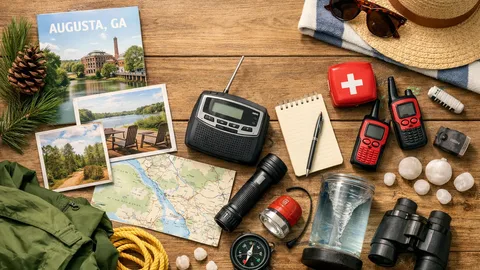
Build an emergency kit: Flashlights, batteries, first aid supplies, medications, important documents in a waterproof container, cash, and enough water and non-perishable food for three days. Keep it in your shelter location, not scattered around the house.
Create a family communication plan: If a tornado hits during the day when everyone's scattered — kids at school, adults at work — how will you reconnect? Cell service may be down. Designate an out-of-state contact everyone can check in with.
Review your insurance: Do you have adequate homeowners or renters insurance? Does it cover tornado damage? What's your deductible? Spring is the time to find out, not after a tree is through your roof.
Identify your safe room: Walk through your house right now and pick your shelter spot. Clear out any clutter. If you have a heavy piece of furniture (like a mattress) you can pull over yourself for extra protection, practice doing it.
Charge backup batteries: Keep portable phone chargers topped off during severe weather season. Your phone is your lifeline to weather information.
What to Do During a Tornado Warning
A tornado watch means conditions are favorable. Stay alert, but don't panic. A tornado warning means a tornado has been spotted or indicated on radar. This is when you act.
When a warning is issued for Richmond County, Columbia County, or Aiken County:
Get to your safe place immediately. Don't wait to see if you can spot the tornado. Don't stand outside filming it. Go now.
Bring your phone, shoes, and weather radio. You need information, protection for your feet in case of debris, and a way to call for help.
Get low and protect your head. Crouch down, cover your head and neck with your arms. If you have a helmet (bike, motorcycle, construction), put it on.
Stay put until the warning expires. Even if it sounds calm outside, wait for the all-clear. Multiple tornadoes can occur in the same storm system.
If you're driving, do not try to outrun a tornado. If you can safely get to a sturdy building, do that. Otherwise, as a last resort, get out of your car and lie flat in a ditch or low-lying area, protecting your head. Your car can become a tumbling projectile.
After the Storm: Safety and Recovery
If a tornado has passed through your area:
Watch for hazards: Downed power lines, broken gas lines, structural damage, and sharp debris are everywhere. Assume all downed lines are live. Wear sturdy shoes and gloves.
Check for injuries: Provide first aid if you're trained, but call 911 for serious injuries. Emergency services may be overwhelmed, so be prepared to wait.
Document damage: Take photos for insurance claims before you start cleanup. Call your insurance company as soon as possible.
Report damage to local emergency management: Richmond County, Columbia County, and Aiken County emergency management offices track damage to coordinate state and federal assistance. Your report helps the community get resources.
Be patient with power restoration: Georgia Power and the local electric cooperatives work through outages systematically, prioritizing critical infrastructure. It may take days.
Resources to Bookmark Now
Don't wait until the storm is bearing down to search for these:
- National Weather Service: The CSRA is covered by the NWS Peachtree City office (for Georgia counties) and NWS Columbia office (for South Carolina counties). Both provide local forecasts, radar, and detailed warnings at weather.gov.
- Richmond County Emergency Management: 706-821-1291 or visit their website for local shelter information, emergency alerts, and recovery resources.
- Columbia County Emergency Services: 706-312-8444 for warning systems and community preparedness information.
- Aiken County Emergency Services: 803-642-1659 for South Carolina side resources and shelter locations.
- Fort Gordon Emergency Services: If you're military-affiliated, contact installation emergency services for Fort Gordon-specific emergency protocols.
Severe weather is part of life in the CSRA. We can't prevent tornadoes, but we can absolutely be prepared for them. Take an hour this week to make your plan, build your kit, and identify your shelter spot. When those warnings start buzzing on your phone this spring, you'll be ready. Stay safe out there, neighbors.
Related Posts
CSRA Spring Weather Guide: Navigating Temperature Swings, Freeze Warnings, and Severe Storm Season
Hurricane Preparedness: What Every CSRA Resident Needs to Know Right Now
When Spring Freezes Threaten Georgia's Peaches: Inside the Fight to Save the CSRA's Most Iconic Crop
Explore Local Businesses
Browse related categories in our directory