Rising Gas Prices Hit CSRA Small Businesses: How Local Landscapers and Service Workers Are Adapting
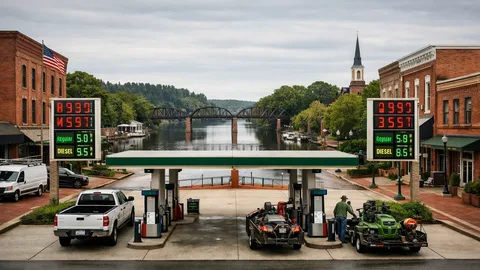
"The gas prices are killing us," says a local landscaper who's been serving Augusta and the surrounding CSRA for over a decade. "I'm spending more on fuel than I am on equipment maintenance some weeks."
It's a sentiment echoing across our region, from Evans to Aiken, as small business owners who depend on their trucks and vans watch fuel costs eat into already tight margins. For mobile service workers -- landscapers, contractors, delivery drivers, mobile pet groomers, and maintenance crews -- the climb in gas prices Augusta residents see at the pump isn't just an inconvenience. It's a threat to their livelihoods.
The Numbers Behind the Pain
Over the past year, gas prices across the CSRA have climbed significantly, with stations in Augusta, North Augusta, and Martinez regularly posting prices that make business owners wince. While prices fluctuate week to week, the baseline has shifted upward in a way that fundamentally changes the math for service businesses.
For a landscaping crew that might typically drive 100-150 miles per day between jobs in Columbia County, downtown Augusta, and Aiken, even modest price increases add up fast. A business that once budgeted around $400 per week for fuel might now be looking at $600 or more -- potentially an extra $10,000+ annually that has to come from somewhere.
And it's not just the drive time between jobs. Equipment matters too. Commercial mowers, leaf blowers, trimmers, and pressure washers all run on fuel. What used to be a predictable operating expense has become a moving target that's harder to plan around.
Who's Feeling It Most
Landscaping services in Augusta and across the CSRA are particularly vulnerable. These businesses typically run multiple crews across a wide service area, from Grovetown to North Augusta to Martinez. The geography of our two-state metro area means lots of windshield time, especially for companies serving clients on both sides of the Savannah River.
But they're far from alone. Mobile pet groomers who bring their services to your driveway, HVAC technicians responding to emergency calls in the summer heat, house cleaners driving between appointments, contractors picking up supplies and managing multiple job sites -- they're all dealing with the same squeeze.
Delivery drivers for local restaurants and small businesses face a double hit: higher fuel costs and the pressure to keep delivery fees reasonable enough that customers don't abandon the convenience.
Pool maintenance crews, mobile car detailers, home health aides, and even mobile notaries are recalculating what it costs to serve our spread-out communities. When your office is your truck, every mile matters.
The Ripple Effect: Price Increases Nobody Wants
Here's the uncomfortable truth: those increased small business costs CSRA owners are absorbing have to go somewhere. Most are reluctantly raising prices, knowing it might cost them customers.
One landscaper explains the dilemma: "I held my prices steady as long as I could, but I can't lose money on every job. I've had to add fuel surcharges for properties further out, and I've lost a few clients because of it. That hurts, but I can't work for free."
Some businesses are adding transparent fuel surcharges -- a separate line item that fluctuates with gas prices. Others are building the increase into their base rates. A few are absorbing the hit entirely, hoping for relief that hasn't arrived.
The ripple extends beyond pricing. Some service businesses are reducing their service areas, no longer taking jobs more than 15 or 20 miles from their base. That means fewer options for customers in outlying areas of the CSRA and less business for the companies themselves.
Others are raising minimum service charges or requiring minimum project sizes to make the drive worthwhile. That pressure washing job in Aiken that once had a $75 minimum might now require $150 or more, putting quick services out of reach for some homeowners.
Smart Adaptations: How CSRA Businesses Are Fighting Back
While nobody likes the situation, we're seeing real creativity and resilience from local business owners. Here's how they're adapting:
Route Optimization: Many service businesses are using apps and software to plan smarter routes, clustering appointments by geography. Instead of ping-ponging across Augusta all day, they're grouping North Augusta jobs on Tuesdays, Evans and Martinez on Wednesdays, and so on. The planning takes more time upfront, but the fuel savings add up.
Scheduling Density: Some landscapers are offering discounts to neighbors who sign up together, allowing them to service multiple properties on the same street without extra drive time. It's a win-win -- customers save money, and the business maximizes efficiency.
Equipment Upgrades: Where possible, businesses are investing in more fuel-efficient equipment. Electric-powered landscaping tools are emerging as an option for some applications, though the upfront cost is steep. Some contractors are upgrading to more efficient trucks, weighing the loan payment against fuel savings.
Pricing Transparency: The most successful businesses are being upfront with customers about why prices are increasing. Most people understand when you explain the math. Honesty builds trust, even when the news isn't great.
Service Bundling: Instead of making five separate trips, some businesses are encouraging customers to bundle services. Your landscaper might now offer gutter cleaning or pressure washing on the same visit, making the drive more profitable for them and more convenient for you.
What Business Advocates and Officials Are Saying
Local business advocates across the CSRA are encouraging small business owners to review their pricing structures regularly rather than waiting until they're in the red. The advice: small, regular adjustments are easier for customers to absorb than sudden, large increases.
Augusta officials monitoring the situation acknowledge the challenge but note that local governments have limited tools to address fuel prices directly. Instead, they're focusing on what they can control -- reducing regulatory burdens where possible and supporting local business development programs that help owners manage costs more effectively.
Economic development leaders in both Augusta and Aiken emphasize the importance of buying local during challenging times. When you choose a CSRA-based service provider over a national chain, more of your money stays in the community, supporting neighbors who are working hard to adapt.
The Customer Perspective: Understanding the New Reality
If you've been surprised by higher bills from your landscaper, house cleaner, or mobile service provider, here's what to understand: they're not price gouging. They're trying to survive.
Most small business owners in our region would rather keep prices low and maintain their customer base. But when fuel costs jump significantly, the math simply doesn't work without adjustments.
Here's how you can help your favorite local service providers weather this:
Be flexible with scheduling -- If your landscaper asks to shift your day to group you with neighbors, consider accommodating. It helps them save fuel.
Bundle services when possible -- Getting multiple things done in one visit reduces their fuel costs and your overall expense.
Pay promptly -- Cash flow is tighter than ever for small businesses dealing with higher operating costs. Paying on time (or early) makes a real difference.
Refer business -- If a service provider serves you well despite higher costs, send neighbors their way. Helping them stay busy makes their trips to your area more efficient.
Show patience and understanding -- These are your neighbors trying to make a living, not corporations with cushions to absorb losses.
Resources for Small Businesses Managing Costs
Local CSRA business owners struggling with rising fuel and operating costs have resources available:
The University of Georgia Small Business Development Center serves Augusta and the surrounding region, offering free counseling on pricing strategies, cost management, and operational efficiency. Business owners can find local assistance through their regional network.
Local chambers of commerce in Augusta, Aiken, and North Augusta provide networking opportunities where business owners share strategies for dealing with common challenges.
Online tools like Route4Me, RoadWarrior, and Google Maps route planning features are helping service businesses optimize daily travel at minimal or no cost.
Some accounting software now includes fuel tracking features that help businesses understand actual costs per job, making pricing decisions more data-driven.
Looking Ahead
Nobody knows when gas prices will ease, or if the current levels are the new normal. What we do know is that CSRA small business owners are resilient, creative, and deeply committed to serving our communities.
The landscaper who's been maintaining your yard for years, the mobile groomer who makes life easier for your aging dog, the contractor who always shows up when they say they will -- they're not just service providers. They're our neighbors, working hard to adapt to circumstances beyond their control.
By understanding the challenges they face and supporting them through this period, we strengthen the local economy that makes the CSRA the community we love. Every time we choose a local service provider, show flexibility, and pay fairly, we're investing in our region's resilience.
Gas prices may be up, but so is the determination of CSRA business owners to weather this storm and continue serving our communities with the quality and care that makes this region special.
Related Posts
Explore Local Businesses
Browse related categories in our directory